
BRAIN-BODY THERAPY
for
OVERACHIEVERS,
PERFECTIONISTS,
& CYCLE-BREAKERS
Do you find yourself high-functioning on the outside while feeling anxious, exhausted, or disconnected on the inside? Many of the individuals and couples I work with are cycle breakers—conscientious, driven people who are ready to heal past trauma, release perfectionism, and build authentic, fulfilling relationships. Whether you are navigating burnout, life transitions, or relationship challenges, therapy offers a compassionate, honest space to find balance and step into your full self.
Your old ways of coping are no longer working.
When life changes, so do you. You no longer fit who you used to be, but haven’t found your new rhythm.
Whether you have endured a loss, are navigating shifting roles and responsibilities, are stepping into partnership or parenthood, or are stuck in painful patterns, I’m here to support you. We are not designed to go through life’s biggest transitions alone.
I draw from interpersonal neurobiology, and my style is direct and warm. I hold a space that is both compassionate and challenges you to grow. All parts of you are welcome here.

What brought you here?

-
When life has been demanding, our system can stay stuck in an exhausting state of high alert. Anxiety can feel like an endless loop of overthinking, physical tension, and constant worry. Therapy provides a grounding space to slow down, regulate your nervous system, and develop sustainable strategies to help you navigate life with greater ease and clarity.
-
High achievers often operate from a place of chronic self-sacrifice, habitually putting others' needs first while striving for flawless performance. Therapy provides a compassionate space to unlearn people-pleasing habits, soften the inner critic, release perfectionist pressure, and establish healthy boundaries so you can live with greater ease and authenticity.
-
Relationships often trigger our deepest attachment patterns and vulnerabilities. Whether navigating communication breakdowns, codependency, recurring conflict, family or work dynamics, or friendship troubles, relationship therapy provides space to understand your attachment style, express needs clearly, and cultivate inner security.
-
Navigating fertility challenges, IVF, or reproductive loss can bring profound grief and uncertainty. Specialized fertility therapy for both women and men provides support to process complex emotions, reduce stress, and navigate your unique path with grace.
-
Whether it’s your first or fourth, each pregnancy brings major physical, emotional, relational, and identity changes. Therapy provides support for expectant mothers and fathers through the mental and emotional challenges of a high-risk pregnancy, pregnancy after loss, or complications. Together, we work through any fears, traumas or blockages in preparation for labor and delivery. I help you prepare your for your 4th trimester— cultivating both practical and emotional tools for the postpartum transition.
-
The postpartum period can involve intense emotional highs and lows, role changes, relationship shifts, and identity transformation. Therapy provides a non-judgmental space to recover, transition into new new rhythms, and be supported through your journey of matrescence. Postpartum does not end at the 6-week mark or after the first 40-days. Biologically and hormonally, postpartum lasts about 2 years; spiritually and psychologically, postpartum is a lifetime of motherhood.
I also support new fathers in individual and couples therapy.
-
Parenthood can be hard, and that does not mean we don’t love our kids or are not grateful for the family we’ve created. Between sleep deprivation, juggling careers and other life demands, and meeting the needs of our children, we can be left depleted, lonely, or overwhelmed. Parenting frequently brings up our own childhood experiences and attachment wounds. Therapy supports parents through co-parenting challenges, emotional stability, and intentional parenting aligned with their core values.
-
Grief is a natural, nonlinear process following loss—whether of a loved one, relationship, role, or life stage. Grief counseling provides a compassionate space to honor your feelings, process loss, and integrate healing over time.
“The only out is through.” -Robert Frost
-
Living in a neurotypical world while navigating ADHD, sensory processing differences, or high sensitivity often leads to severe executive dysfunction, emotional dysregulation, chronic masking, and deep-seated self-doubt. Neurodivergent-affirming therapy provides a safe, validating space to untangle sensory overload, unlearn toxic shame, and build personalized tools for executive function that honor your unique brain wiring rather than forcing conventional productivity methods.
-
Navigating Jewish identity today involves a complex interplay of historical, cultural, and personal experiences. Jewish-affirming therapy provides a culturally attuned, deeply understanding space to explore the unique dynamics of Jewish identity, intergenerational trauma, the emotional impact of antisemitism, and community or family expectations. Whether you are addressing ancestral stress, religious transitions, intercultural relationships, or seeking therapy where your background is inherently understood and respected, this space supports your mental health through a compassionate, culturally grounded lens.
-
Trauma resides in brain, body, and soul. Through specialized, somatic and experiential modalities, trauma therapy gently addresses single-event trauma, complex developmental trauma (C-PTSD), and generational patterns to restore self-trust, brain-integration, resilience, and agency.
-
Navigating hormonal shifts, sleep disruptions, mood changes, and identity transitions during perimenopause can feel overwhelming. Many modern women are going through perimenopause at the same time as having and raising young kids. Women’s therapy offers an informed and respectful space to process physical and emotional changes, manage stress, and reclaim vitality through this transformative stage of life.
How I can help:

-
Brainspotting utilizes specific eye positions to locate, process, and release neurophysiological sources of emotional trauma, pain, and performance anxiety. By harnessing the brain's natural self-healing capacities, Brainspotting facilitates deep brain-body processing.
-
Parts Work (inspired by Internal Family Systems) views the mind as composed of various "parts"—such as inner critics, managers, or vulnerable inner children—led by a core Self. Working with and harmonizing these inner parts fosters self-compassion, reduces internal conflict, creates inner coherence, and unlocks your inherent resilience and sense of internal safety.
-
Somatic therapy integrates the body into your healing process, through mindfulness. Because trauma and chronic stress are stored in the body's nervous system, somatic practices help track physical sensations, complete self-protective responses, and expand emotional regulation capacity.
-
Experiential therapy moves beyond traditional talk therapy by engaging active, present-moment emotional processing. Through guided focus, mindfulness, and expressive techniques, clients gain direct insight and transform stuck emotional, mental, and behavioral patterns.
-
This relational and psychodynamic approach explores how early caregiver relationships, unconscious dynamics, and systemic environments shape how you relate to yourself and others today. By identifying long-standing attachment patterns, we clear pathways for deeper connection and self-understanding.
-
Gottman method couples therapy utilizes evidence-based, structured interventions to help partners navigate conflict, de-escalate negative communication patterns, generate positive interactions, and deepen intimacy. These practical tools empower couples to build a resilient foundation of friendship, mutual support, and lasting connection.
-
Relational Life Therapy (RLT) is a direct, integrative approach that addresses recurring relational patterns and power dynamics between partners. By shifting from blame to personal accountability and turning complaints into clear requests, RLT helps couples break repetitive conflict cycles and build honest, sustainable intimacy.
-
Explore and process inherited family patterns, ancestral trauma, and cultural dynamics to foster personal choice. By identifying lingering generational cycles, therapy helps you establish healthy boundaries and write a new story for yourself and future generations.
-
Interpersonal Neurobiology (IPNB), developed by Dr. Dan Siegel, explores how the brain, body, mind, and relationships work together to shape our well-being, and how the brain can change through experience and intentional practice. In therapy with me, we go beyond talking about change to understanding how lasting change happens in the brain and nervous system, using that knowledge to help you shift old patterns, build new ways of relating, and create meaningful change from the inside out.
-
For many Jews, life has changed since October 7th, 2023. It’s crucial for you to feel safe in your therapy to explore and process the full range of what it means to be Jewish today. In therapy with me you do not have to defend your culture, heritage, identity, or beliefs.
About the therapist:
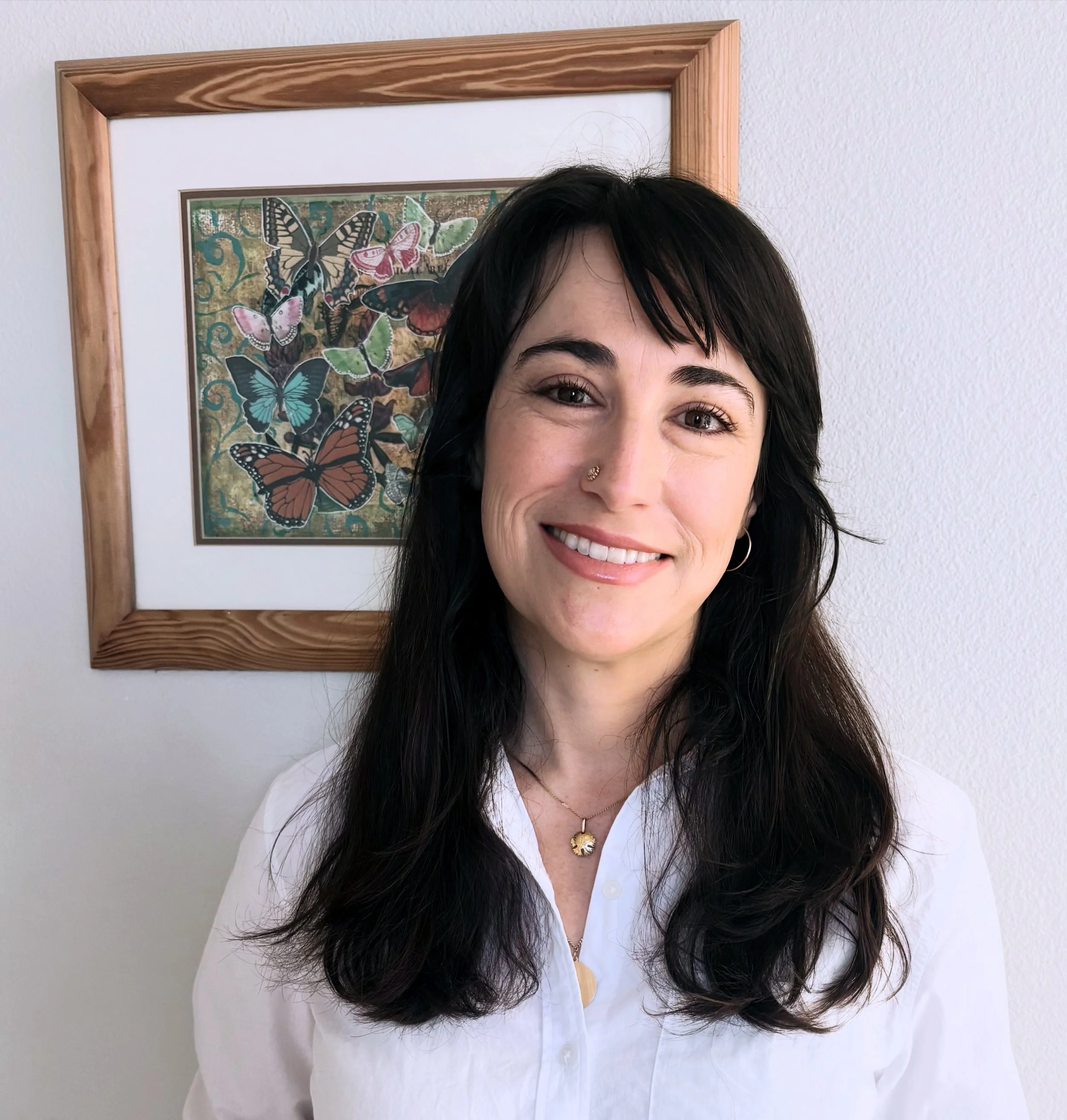
I’m Eve—a licensed therapist, mother of two, and wife. I am passionate about providing holistic care that honors the integration of mind, body, and soul, exploring how we relate to ourselves, each other, the earth, our communities, and something greater. Rooted in a background in dance, art, and yoga, my style is both science-based and intuitive. I completed my undergraduate studies at UC Berkeley and earned my master's degree in the San Francisco Bay Area. As a Los Angeles native who has also spent time in North County San Diego, I bring a down-to-earth presence paired with an active therapeutic approach. I’m so glad you’re here, and I look forward to supporting you on your healing journey.
“A person is a fluid process, not a fixed or static entity; a flowing river of change, a continually evolving constellation of possibilities.”
— Carl Rogers

If this sounds familiar, you’re in the right place:
Things that used to come easily to you now feel difficult
Motherhood or parenthood is not what you expected
You’re trying your best, but still feel guilty for falling short
Your relationship is strained, even though you love each other
You're feeling joy and grief at the same time
You don't recognize yourself since going through a fertility journey, loss, a challenging pregnancy or birth, or becoming a parent
You keep thinking, why didn't anyone tell me it would be this hard?
You're holding it together for everyone else while feeling depleted inside
You feel exhausted and overstimulated and can’t seem to find your footing
Your old ways of coping are no longer accessible or effective
I am here to help:
Strengthen your most important relationships — with yourself, your partner, and your child — by understanding the patterns that shape how you show up during stressful moments.
Heal what’s stuck so you can move beyond old wounds, protective parts, and trauma that continue to influence how you relate.
Feel more grounded in your mind and body by learning to work with anxiety, overwhelm, and overstimulation at the level of your nervous system—not just through talking about them.
Navigate grief, loss, and major life transitions with space to process what has happened and support to find your footing again.
Develop healthier boundaries and more secure relationships by understanding your needs, communicating them clearly, and staying connected to yourself while relating to others.
Feel more stable through parenthood as you navigate pregnancy, postpartum, family dynamics, and shifting roles.
Reconnect with yourself and trust your inner knowing so you can move through each new season with greater clarity, confidence, and presence.
Not sure yet? Reach out with any questions— I’m happy to connect.